About Metal Transfer Ladle
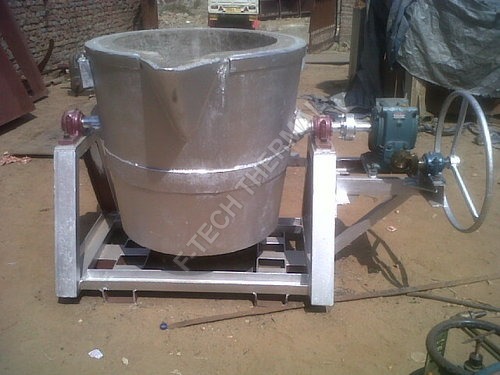
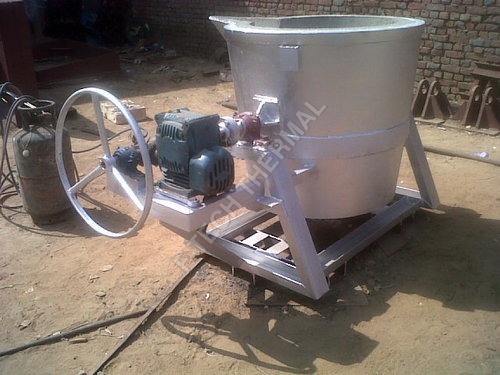
We are instrumental in providing our clients with a perfect quality Metal Transfer Ladle, which is extensively used to transfer molten metal. Offered ladle is highly recognized in the market owing to its robust construction, high performance, easy maintenance, excellent finish, compact design and longer operational life. Prior to final dispatch, these ladles are quality checked by our quality controllers on various parameters set by the industry. In addition to that, our esteemed customer can avail this Metal Transfer Ladle in standard as well as customized options to meet the exact needs of the customers.
Versatile Capacity & Operation ModesThe Metal Transfer Ladle is available in various capacities from 0.5 ton to 10 tons, with customization based on client requirements. Choose between manual, gear-operated, or motorised tilting mechanisms to best suit your operational demands. Its modular design supports a wide range of industrial processes, ensuring flexibility and reliability.
Superior Safety & DurabilityEquipped with heat-resistant handles, a robust locking system, and high-quality refractory lining, safety is at the forefront of this ladles design. Its sturdy construction using Mild Steel, Stainless Steel, or Cast Iron guarantees longevity and resistance to corrosion. Paint-coated surfaces further extend product life in high-temperature environments.
Customizable Design & MountingClients can opt for floor-mounted, mobile, or crane-mounted configurations. Diameter options range from 300 mm to 1200 mm, and color choices include industrial grey or customized shades. The ladle features an optimized spout and pour mechanism for controlled flow, with optional lids available for enhanced operational flexibility.
FAQs of Metal Transfer Ladle:
Q: How is the Metal Transfer Ladle operated and which mechanism should I choose for my facility?
A: This ladle can be operated manually, via a gear system, or motorized tilting (using a 35 HP motor). The choice depends on your workflow volume and safety preferences. Manual and gear-operated versions suit smaller batches or low-budget setups, while motorised tilting enhances efficiency and safety in high-capacity environments.
Q: What are the main benefits of using heat-resistant paint and refractory lining in this ladle?
A: Heat-resistant paint protects the ladles surface from constant exposure to high temperatures, reducing wear and corrosion. The high-grade refractory lining provides robust insulation, enabling the ladle to withstand core operating temperatures up to 1650C and ensuring safe and efficient molten metal transfer.
Q: When is the bottom pour mechanism preferred over tilting for molten metal pouring?
A: A bottom pour mechanism offers precise, controlled pouringideal when accuracy and minimizing slag inclusion are crucial. Tilting mechanisms are better suited for faster, larger volume pours; your choice depends on the complexity and demands of your casting process.
Q: Where can the Metal Transfer Ladle be installed in my facility?
A: You can floor-mount the ladle, set it up as a mobile unit for ease of movement, or integrate it with a crane for overhead transfer. The mounting options are tailored to your workspace layout and operational needs, allowing for both fixed and flexible installations.
Q: What customization options are available for this ladle?
A: Customization includes capacity (0.510 tons or as required), diameter (3001200 mm), operational mechanism, surface finish, color, handle type, lid/top cover, mounting type, and choice of material (MS, SS, CI). This ensures the ladle aligns perfectly with your specific process requirements.
Q: How does the locking mechanism enhance operational safety?
A: The integrated locking mechanism secures the ladle during transfer and pouring, preventing accidental tilting or spillage. Combined with heat-resistant handles, this feature protects operators and ensures safe handling of high-temperature molten metal.
Q: What industries commonly use this Metal Transfer Ladle?
A: Steel plants, foundries, and metallurgical industries are primary users. The ladle is designed for molten metal transfer and pouring processes where durability, precision, and safety are essential.





 Send Inquiry

